If you are searching for where to start online as a beginner, there is a good chance you have already opened a dozen tabs. One promises riches from dropshipping, another says to become a freelancer, a third insists you need a YouTube channel. By the end you know less than when you started.
This guide narrows all of that to one path. You will see the main options, pick one, learn what you need on day one, and get a five-step plan for your first week. Along the way I will explain where Wealthy Affiliate fits and who it suits.
Why starting online feels so overwhelming (and why it’s not your fault)
The internet has no front door. Nobody hands you a map and says “begin here.” Instead you meet thousands of voices, each selling a different method and each describing their method as the one that matters.

Three things make this harder than it should be.
- Too many options at once. Affiliate marketing, freelancing, ecommerce, print on demand, coaching, content creation and more all get presented as equal starting points. When every choice looks equally good, picking one feels risky.
- Jargon that assumes you already know. Terms like “funnel,” “niche,” “traffic” and “conversion” get used as if everyone learned them in school.
- Contradictory advice. One expert says to build a website first. Another says social media is the only thing that works. Both can be partly right, but a beginner cannot tell which parts.
Feeling stuck in this situation is a normal reaction to a poorly organised pile of information. The fix is to remove choices until one clear next action is left.
The three beginner paths people usually choose between
Most beginners end up weighing three broad routes. Each is legitimate, and each suits a different kind of person.
Selling your skills as a service
Freelancing means you do work for clients: writing, design, bookkeeping, virtual assistance, editing. You can be paid fairly quickly, because you are trading your time for money. The catch is that you need a skill someone will pay for, and your income is tied to the hours you can work. If you already have a marketable skill, this path is worth a serious look.
Selling products
Ecommerce covers running an online shop, selling physical goods, or selling digital items. It involves sourcing or creating products, handling orders, managing customer questions and often paying up front for stock or tools. It can work well, but it has the most moving parts for someone who is just beginning.
Building a website around a topic
With this route you choose a subject, publish helpful content about it, and earn by recommending products or services that your readers genuinely find useful. This is often called affiliate marketing. You do not need a product of your own, a client list or a warehouse. What you need is a topic, the willingness to write or create helpful content regularly, and patience, because a website grows through accumulated work rather than overnight.
None of these is the “correct” answer for everyone. If you have no specific skill to sell and no product in mind, the third path asks the least of you at the start, which is why the rest of this guide follows it.
Why a website on a topic you care about is a steady place to begin
A website you own is a base that stays in your control. Social media accounts can change their rules or reach, but a site is yours, and everything you publish on it remains available to readers and search engines.
The topic matters more than most beginners expect. You will be writing about it for months, so choosing something you find interesting keeps the work from becoming a chore. It also helps in a practical way: when you are curious about a subject, you notice what people struggle with, and you can write more useful answers.

A good starting topic usually has these qualities:
- You can think of at least twenty questions a newcomer to the topic would ask.
- You would be happy to read, research and write about it for a year.
- People spend money on things related to it, whether that is equipment, courses, software or services.
Topics can be broad (gardening) or narrower (growing vegetables in small apartments). A narrower topic is generally easier for a beginner, because there is less competing content to measure yourself against and your site’s purpose is clear to readers.
A website also teaches skills that carry over. Writing for readers, understanding what people search for, and organising information are useful whether your site grows into a business or leads you somewhere else.
What you actually need on day one (less than you think)
Many beginners delay starting because they believe they need a checklist of tools, a logo, a business plan and a budget. For the first day, you need very little.
- A computer and an internet connection. A basic laptop is enough.
- An email address you check regularly.
- A topic you are curious about. It does not need to be perfect. You can adjust it after a few weeks of writing.
- A small, regular block of time. Thirty to sixty minutes a day, done consistently, will take you further than a single long weekend followed by silence.
- Willingness to be a beginner. Your first pieces of writing will not be your best, and that is how everyone starts.
Here is what you do not need on day one: a finished brand, paid advertising, a large following, technical knowledge of code, or any certainty about how your site will look in a year. Those things get sorted out as you go, and it is much easier to make those decisions once you have started and have something real in front of you.
Your first week: five small steps you can take
Treat this as a gentle schedule rather than a test. If a step takes two days, that is fine.
Step 1: List three topics you could talk about for hours
Write down three subjects you enjoy or already know something about. Hobbies, past experiences, problems you have solved for yourself and things friends ask your advice about are all good sources. Do not judge them yet. Just list them.
Step 2: Test each topic with twenty questions
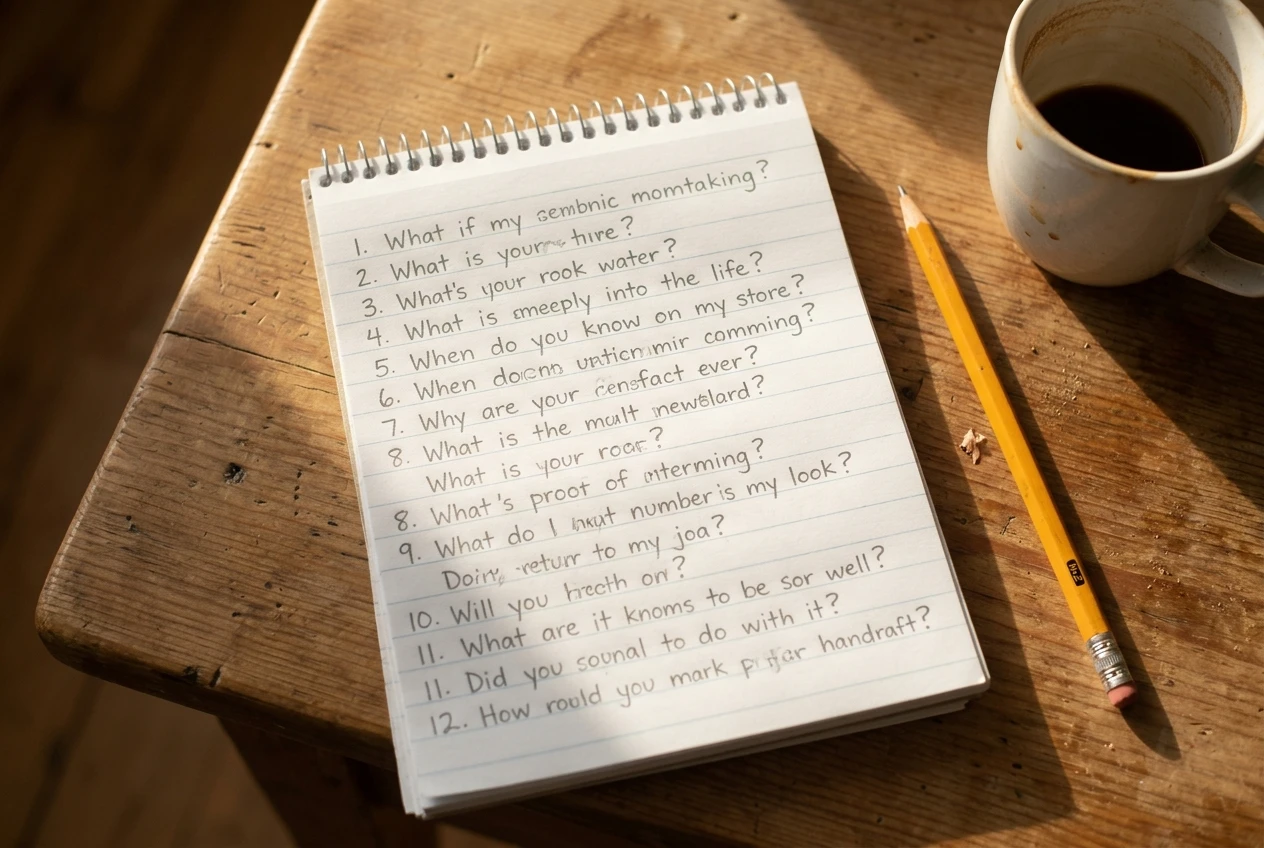
For each of your three topics, write as many questions as you can that a newcomer might ask. The topic where the questions come easily, and where you feel like answering them, is usually the right one. A topic where you run out of questions after five is a signal to choose another or narrow it differently.
Step 3: Open a free account and take the first lesson
Having a guided starting point removes a lot of guesswork. A free Wealthy Affiliate account lets you go through the first lesson and see how the training is laid out before you decide anything further. Treat this as a trial: you are learning how the process works, and you are not committing to anything.
Step 4: Choose the site’s purpose in one sentence
Write a sentence that says who your site helps and with what. For example: “This site helps people who are new to [your topic] get started without wasting money.” Writing this sentence yourself, in your own words, gives every later decision a reference point, from what to write about to how to describe your site.
Step 5: Draft your first article idea
Pick one question from your list and write a few paragraphs answering it as if you were explaining it to a friend. You do not have to publish it. The point is to find out what it feels like to turn a question into a helpful answer, because that is the main activity of a topic website.
By the end of the week you will have a topic, a purpose, a first lesson behind you and a first piece of writing. That is a real start.
Where Wealthy Affiliate fits, and who it is and isn’t right for
Wealthy Affiliate is a platform where you learn how to build a website and a business around a topic, and where you can do the building in the same place. Its training sits in Learn, live classes and their recordings sit in LIVE, and your work is organised in a Hub, which is the unit that holds one website project. You also get a community of other members you can ask when you get stuck, and Writer and Artist Agents that help produce articles and images for your site, with credits paying for what that work costs.
I earn a referral commission if you decide to become a paid member through my link, so you should know that when weighing my recommendation. Starting with the free account lets you judge the platform for yourself before spending anything. Start a free Wealthy Affiliate account and try the first lesson.
It tends to suit you if:
- You want a single place that combines training, tools and people to ask.
- You are willing to learn step by step and publish regularly.
- You prefer building something you own over trading hours for pay.
- You understand that results depend on your effort and time.
It is probably not the right fit if:
- You need income within days. Building a website is gradual, and no one can promise a timeline.
- You would rather pay someone to do everything for you.
- You want to work only with physical products or with clients one on one. The freelancing and ecommerce paths above are better served elsewhere.
- You are not interested in writing or creating content, since that is the core activity.
Being clear about this is better for both of us. A good fit stays and grows. A poor fit wastes your time, and I would rather you found that out early and for free.
Common beginner worries, answered gently

“I’m not an expert. Can I still write about a topic?”
Yes. You do not need to be the leading authority. You need to be a few steps ahead of the person reading, and honest about what you know. Many readers prefer a guide who is still close to the beginner experience, because that guide remembers which parts were confusing.
“I’m not technical. Will this be too hard?”
Most beginners start with no technical knowledge. Building a website today involves far less code than people assume, and good training introduces each piece in order. You will still feel unsure at times, and that is part of learning anything new.
“How long until I earn money?”
No honest answer includes a specific number of weeks. Some people take months before their site earns anything, and some never reach that point, usually because they stop publishing. What you can control is your consistency, so aim for steady progress and treat early income as a bonus, not a deadline.
“Is this a scam?”
It is reasonable to ask. Be wary of anyone who promises fast, guaranteed income, and that wariness applies to any program, including the one I am recommending. Starting with a free account means you can look at the training and community first and decide with real information.
“What if I pick the wrong topic?”
Your first topic is a starting point. If after a month of writing it feels wrong, you will have learned how to build a site, research questions and write for readers, and those skills move with you to the next topic. Choosing imperfectly and starting is better than choosing perfectly and never beginning.
Take one small action
You do not need to solve the whole picture today. Pick one topic, write down your twenty questions, and take one small action.
If you would like guidance while you do it, you can Start a free Wealthy Affiliate account and take the first lesson. This is my referral link and it costs you nothing to look around. You will be able to try the first steps with training and a community behind you, before you commit to anything.